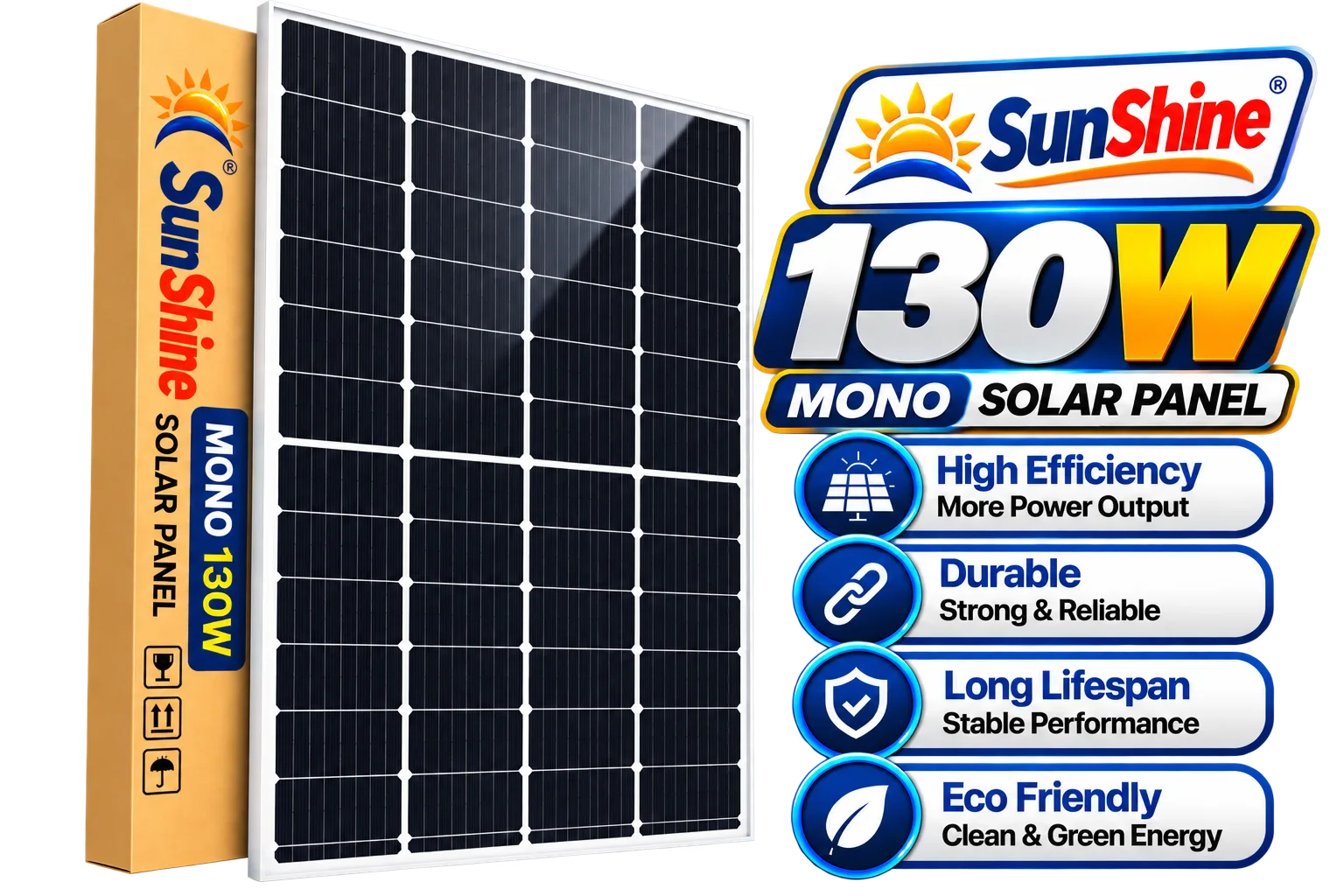
The smart solar and power (স্মার্ট সোলার অ্যান্ড পাওয়ার) team presents a detailed guide to the Sunshine 130W solar panel, a high‑efficiency monocrystalline module designed for reliable off‑grid use in Bangladesh. This article walks you through the panel’s technical data, real‑world benefits, installation steps, and maintenance practices so you can make an informed decision.
smart solar and power Sunshine 130W panel specifications and performance
The Sunshine 130W panel is built with German‑cell technology and a modern MBB (Multi‑Bus‑Bar) design. Its key parameters are:
- Maximum Power (Pmax): 130W
- Maximum Power Voltage (Vmp): 18V
- Maximum Power Current (Imp): 7.22A
- Open Circuit Voltage (Voc): 21.06V
- Short Circuit Current (Isc): 8.45A
- Maximum System Voltage: 1000V
- Maximum Series Fuse: 20A
- Power Tolerance: 0~+5W
- Dimensions: 1200 × 670 × 30 mm
These figures translate into stable power output even under high temperature or low‑light conditions, making the panel suitable for rural electrification, solar home systems, and small commercial setups.
Why monocrystalline matters
Monocrystalline cells have a uniform crystal structure that yields higher efficiency than polycrystalline alternatives. The Sunshine 130W panel typically reaches efficiencies above 18%, allowing you to generate more electricity from a limited roof space.
Choosing the right solar solution for your needs
Bangladesh’s climate offers abundant sunlight, but the choice between on‑grid, off‑grid, and hybrid systems depends on location, load profile, and future expansion plans. The Sunshine 130W panel fits best in off‑grid or hybrid configurations where battery storage or a solar inverter is part of the system.
- Off‑grid homes: Pair the panel with a lithium battery bank and a charge controller to store energy for night‑time use.
- Hybrid setups: Connect the panel to a hybrid inverter that can feed excess power to the grid while also charging batteries.
- Solar home systems (SHS): Use multiple Sunshine 130W panels in series or parallel to meet higher daily energy demands.
When sizing a system, calculate your daily load in watt‑hours, then divide by the panel’s average daily production (roughly 4–5 kWh per 130W panel in Bangladesh). Add a safety margin of 20% to accommodate cloudy days.
Key factors to evaluate
Look for a panel with a robust warranty (the Sunshine 130W offers 25 years), high temperature coefficient, and certified IEC standards. The panel’s 1000V system voltage rating ensures compatibility with most inverters available locally.
Installation best practices for optimal performance
Proper mounting and wiring are essential to extract the panel’s full potential. Follow these steps:
- Site assessment: Choose a location with minimal shading from trees or buildings. The ideal tilt angle in Bangladesh ranges from 15° to 20° to maximize annual yield.
- Mounting structure: Use corrosion‑resistant aluminum or galvanized steel frames. Secure the panel with stainless‑steel bolts to withstand wind loads.
- Electrical connections: Connect panels in series to increase voltage or in parallel to increase current, respecting the maximum series fuse rating of 20A.
- Grounding: Ground the frame according to local electrical codes to protect against lightning strikes.
- Inspection: Verify all connections, torque values, and clearances before energizing the system.
For a hassle‑free experience, get a free expert consultation from smart solar and power. Their engineers will perform a site survey, recommend the optimal number of panels, and handle professional installation.
Connecting to a charge controller
A MPPT (Maximum Power Point Tracking) charge controller is recommended for the Sunshine 130W panel. It extracts the maximum power from the panel’s voltage‑current curve, improving overall system efficiency by up to 30% compared with PWM controllers.
Maintenance tips to extend panel life
The Sunshine 130W panel is designed for durability, but regular upkeep ensures long‑term performance.
- Cleaning: Remove dust, bird droppings, and pollen every 2–3 months using a soft brush and mild soap solution. Avoid abrasive tools that could scratch the glass.
- Inspection: Check for loose connections, corrosion, or cracked frames during each cleaning cycle.
- Performance monitoring: Use a solar monitoring app or inverter display to track daily energy output. A sudden drop may indicate shading or a faulty connection.
With a 25‑year warranty, the panel’s performance degradation is limited to about 0.5% per year, meaning it will still deliver close to 120W after two decades of use.
Common maintenance mistakes to avoid
Never use high‑pressure water jets, as they can force water into the junction box. Avoid cleaning the panel when it is hot; let it cool down to prevent thermal shock.
Comparing Sunshine 130W with alternative panels
When evaluating alternatives, consider efficiency, warranty, and build quality. A typical 120W polycrystalline panel may weigh more and have a lower efficiency (≈15%). The Sunshine 130W’s German‑cell technology provides a better power‑to‑area ratio, which is crucial when roof space is limited.
Another comparison point is temperature coefficient. The Sunshine 130W maintains higher output at 45 °C, a common ambient temperature in many Bangladeshi regions, whereas cheaper panels may lose up to 2% of power per degree rise.
When to choose a higher‑wattage panel
If your load exceeds 1 kWh per day, consider adding multiple Sunshine 130W units or opting for a 250W panel with similar efficiency. The modular nature of the Sunshine series allows easy scaling without redesigning the mounting structure.
Why trust smart solar and power for your solar journey
smart solar and power (স্মার্ট সোলার অ্যান্ড পাওয়ার) has built a reputation as Bangladesh’s most reliable solar solutions provider. Their services include:
- Free expert consultation and site surveys
- Professional installation by certified technicians
- After‑sales support and warranty handling
- Access to a network of authorized distributors for genuine parts
Choosing a trusted partner reduces the risk of installation errors, ensures compliance with local regulations, and provides peace of mind during the system’s lifespan.
Customer success stories
Farmers in Rangpur report uninterrupted power for irrigation pumps after installing three Sunshine 130W panels with a 5 kWh lithium battery bank. In coastal Khulna, a small school uses a hybrid system featuring the same panel to run lights and computers even during grid outages.
Frequently asked technical questions (outside FAQ section)
Understanding the panel’s electrical characteristics helps you design a safe system. For instance, the panel’s open‑circuit voltage of 21.06 V means you can safely connect up to 55 panels in series while staying below the 1000 V system limit.
When pairing with an inverter, ensure the inverter’s input voltage range includes the panel’s Vmp of 18 V. Most 12 V‑type charge controllers accept this range without issue.
Next steps
Ready to start your solar project? Visit the explore our solar products page to see the full Sunshine lineup and related accessories. Remember, a well‑planned system with the Sunshine 130W panel can deliver clean, renewable energy for years to come.
Related reading: Smart Solar and Power: How Much Roof Space Do Solar Panels Need in Bangladesh?
Frequently Asked Questions
What is the ideal tilt angle for installing the Sunshine 130W panel in Bangladesh?
The recommended tilt angle is between 15° and 20°, which maximizes annual solar exposure while reducing dust accumulation.
Can I connect multiple Sunshine 130W panels in series?
Yes, you can connect up to 55 panels in series without exceeding the 1000V maximum system voltage, provided the wiring and fuse ratings are appropriate.
How often should I clean the Sunshine 130W panel?
Cleaning every 2–3 months is sufficient; use a soft brush and mild soap, and avoid high‑pressure water or abrasive tools.
Is the Sunshine 130W panel suitable for a hybrid solar system?
Absolutely. Its 18V Vmp works well with hybrid inverters and MPPT charge controllers, allowing seamless grid interaction and battery charging.
What warranty does the Sunshine 130W panel offer?
The panel comes with a 25‑year performance warranty, guaranteeing a maximum power degradation of about 0.5% per year.