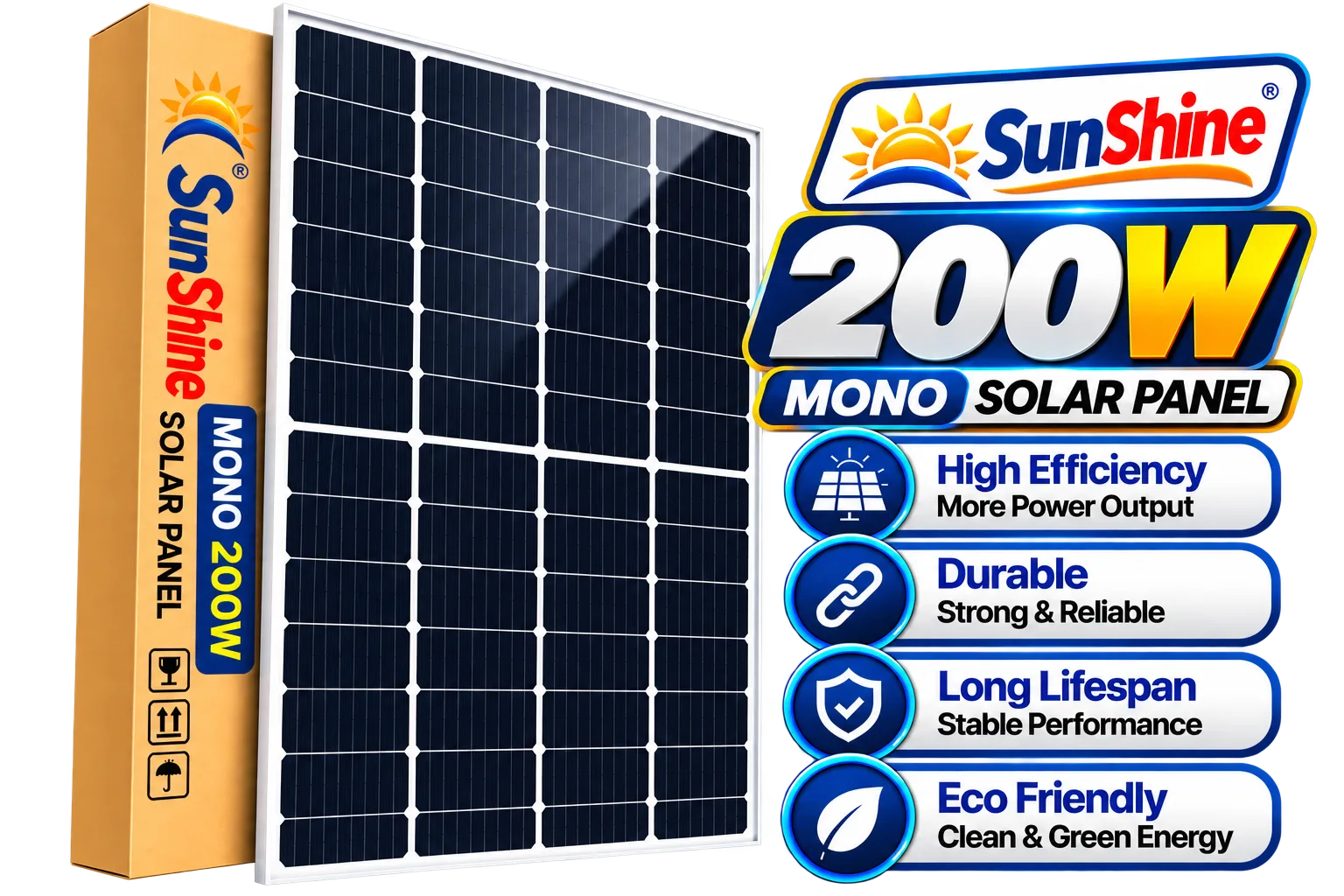
smart solar and power brings a trusted solution for anyone seeking a durable, high‑performance solar panel in Bangladesh. The Sunshine 200W (সানশাইন ২০০ওয়াট) is a 12V monocrystalline module designed for off‑grid applications, featuring Germany cell technology and an MBB frame for long‑term reliability. In this guide we walk through the panel’s specifications, why it suits Bangladeshi conditions, how to choose the right system, installation steps, maintenance tips, and common mistakes to avoid.
Why choose the Sunshine 200W panel from smart solar and power?
The Sunshine 200W panel offers a blend of power output and durability that matches the challenges of Bangladesh’s climate. Its 200W maximum power rating, 18.9V Vmp, and 10.58A Imp provide a solid foundation for solar home systems, water pumping, and small‑scale renewable projects. The panel’s 25‑year warranty underscores confidence in its long‑term performance.
Key technical specifications
- Maximum Power (Pmax): 200W
- Maximum Power Voltage (Vmp): 18.9V
- Maximum Power Current (Imp): 10.58A
- Open Circuit Voltage (Voc): 22.11V
- Short Circuit Current (Isc): 12.38A
- Maximum System Voltage: 1500V
- Maximum Series Fuse: 25A
- Power Tolerance: 0~+5W
- Dimensions: 1480 × 670 × 30 mm
These figures make the panel a reliable choice for both off‑grid and hybrid setups, especially when paired with high‑efficiency inverters and lithium‑ion batteries.
Matching the Sunshine 200W with the right solar system
When planning a solar solution, start by estimating daily energy consumption. A typical Bangladeshi household using LED lighting, a refrigerator, and a small TV may require 1–2 kWh per day. The Sunshine 200W panel produces roughly 800–1000 Wh per day under optimal sunlight, so two to three panels often meet that demand.
Combine the panels with a charge controller rated for at least 25A to protect the battery bank. smart solar and power recommends using MPPT controllers for higher efficiency, especially in cloudy conditions common during the monsoon season.
Choosing compatible batteries
Lithium‑ion batteries are the preferred storage option because of their high depth‑of‑discharge, low maintenance, and longer cycle life. Pair a 12V 100Ah lithium battery with a single Sunshine 200W panel for a modest system, or scale up to a 12V 200Ah bank for larger loads.
Installation best practices for the Sunshine 200W
Proper installation maximizes energy harvest and extends panel life. Follow these steps:
- Site survey: get a free expert consultation from smart solar and power to assess shading, orientation, and structural support.
- Orientation: Mount the panel facing true south (or north in the southern hemisphere) at a tilt angle of 15‑20° to capture the most sunlight year‑round.
- Mounting: Use corrosion‑resistant brackets and ensure the frame is secured to a sturdy roof or ground rack. The MBB design of the Sunshine 200W tolerates wind speeds up to 2400 Pa.
- Wiring: Use solar‑rated cables (minimum 4 mm²) and keep connections tight to avoid resistance loss. Install a DC disconnect between the panel and charge controller.
- Grounding: Connect the panel frame to earth ground to protect against lightning strikes.
After mounting, verify voltage with a multimeter. The open‑circuit voltage should be close to 22.1V under full sun.
Commissioning the system
Connect the charge controller to the battery bank, then link the inverter if you need AC power. Power on the system and monitor the display for charging current (should be near 10.5A) and battery voltage. Adjust the tilt if the controller shows low voltage during peak sun hours.
Maintenance tips to keep the Sunshine 200W performing
Regular upkeep ensures the panel retains its efficiency for decades. Follow these simple practices:
- Cleaning: Rinse the surface with water and a soft brush every 2‑3 months. In dusty regions, clean more often. Avoid abrasive cleaners that could scratch the glass.
- Inspection: Check mounting bolts, wiring, and connectors quarterly for corrosion or loosening.
- Performance monitoring: Use a solar monitoring app or the controller’s LCD to track daily output. A drop of more than 10% may indicate shading or a fault.
- Professional service: Schedule an annual check‑up with smart solar and power technicians to verify system health and update firmware on smart controllers.
These steps help you avoid common pitfalls such as reduced output due to shading, loose connections, or battery over‑discharge.
Common mistakes and how to avoid them
Even experienced users can stumble over a few recurring errors. Here are the most frequent and the right ways to prevent them:
- Undersizing the charge controller: Selecting a controller below 25A can cause overheating. Always match or exceed the panel’s short‑circuit current (12.38A) with a safety margin.
- Improper tilt angle: A flat installation reduces seasonal output. Adjust the tilt according to the latitude of Bangladesh (≈23.5°) for optimal harvest.
- Ignoring temperature coefficients: High ambient temperatures lower voltage. Ensure adequate airflow behind the panel to mitigate heat buildup.
- Skipping grounding: Un‑grounded panels are vulnerable to lightning damage. Use a proper earth rod and copper grounding wire.
By addressing these issues early, you protect your investment and enjoy consistent power.
Why smart solar and power is the trusted provider in Bangladesh
With years of field experience, smart solar and power (স্মার্ট সোলার অ্যান্ড পাওয়ার) offers more than just products. The company provides free expert consultations, detailed site surveys, professional installation, and a responsive after‑sales support team. Their technicians are trained in the latest solar standards and can help you integrate the Sunshine 200W panel into any system—whether it’s a small solar home system or a larger community micro‑grid.
Choosing a reputable provider ensures you receive genuine panels, correct wiring, and ongoing service that keeps your system running at peak efficiency for decades.
Next steps for Bangladeshi homeowners
If you are ready to move forward, start with a free assessment from smart solar and power. Their experts will calculate the optimal number of Sunshine 200W panels, recommend compatible batteries and inverters, and design a layout that fits your roof or land area.
After the design phase, you can explore our solar products to select accessories such as mounting kits, MPPT controllers, and monitoring devices. With proper planning, installation, and maintenance, the Sunshine 200W panel can supply clean, reliable energy for years to come.
Conclusion
Investing in the Sunshine 200W panel from smart solar and power equips Bangladeshi households with a resilient, low‑maintenance source of renewable energy. By following the guidelines in this article—selecting the right components, installing with best practices, and maintaining regularly—you can enjoy uninterrupted power while contributing to a greener future.
Related reading: LiFePO4 Battery Specifications and Benefits: The Definitive Guide for Bangladesh
Frequently Asked Questions
What is the typical lifespan of the Sunshine 200W panel?
The Sunshine 200W panel comes with a 25‑year performance warranty, and most panels continue to produce above 80% of their rated power for 30 years under normal conditions.
Can I use the Sunshine 200W panel with a grid‑tied inverter?
Yes, the panel can be part of a grid‑tied system when combined with an appropriate MPPT charge controller and inverter, but you must follow local net‑metering regulations.
How much space does one Sunshine 200W panel require?
Each panel measures 1480 mm × 670 mm, so you need roughly 1.0 square meter of unobstructed area for a single unit, allowing space for mounting hardware and airflow.
Is the Sunshine 200W suitable for rainy seasons in Bangladesh?
The panel’s monocrystalline cells perform well in low‑light conditions, and its robust frame resists moisture, making it reliable during the monsoon season when installed with proper sealing.
What maintenance routine should I follow?
Clean the panel surface every 2‑3 months, inspect mounting bolts and wiring quarterly, and monitor performance with a charge controller or solar app to catch any drop in output early.