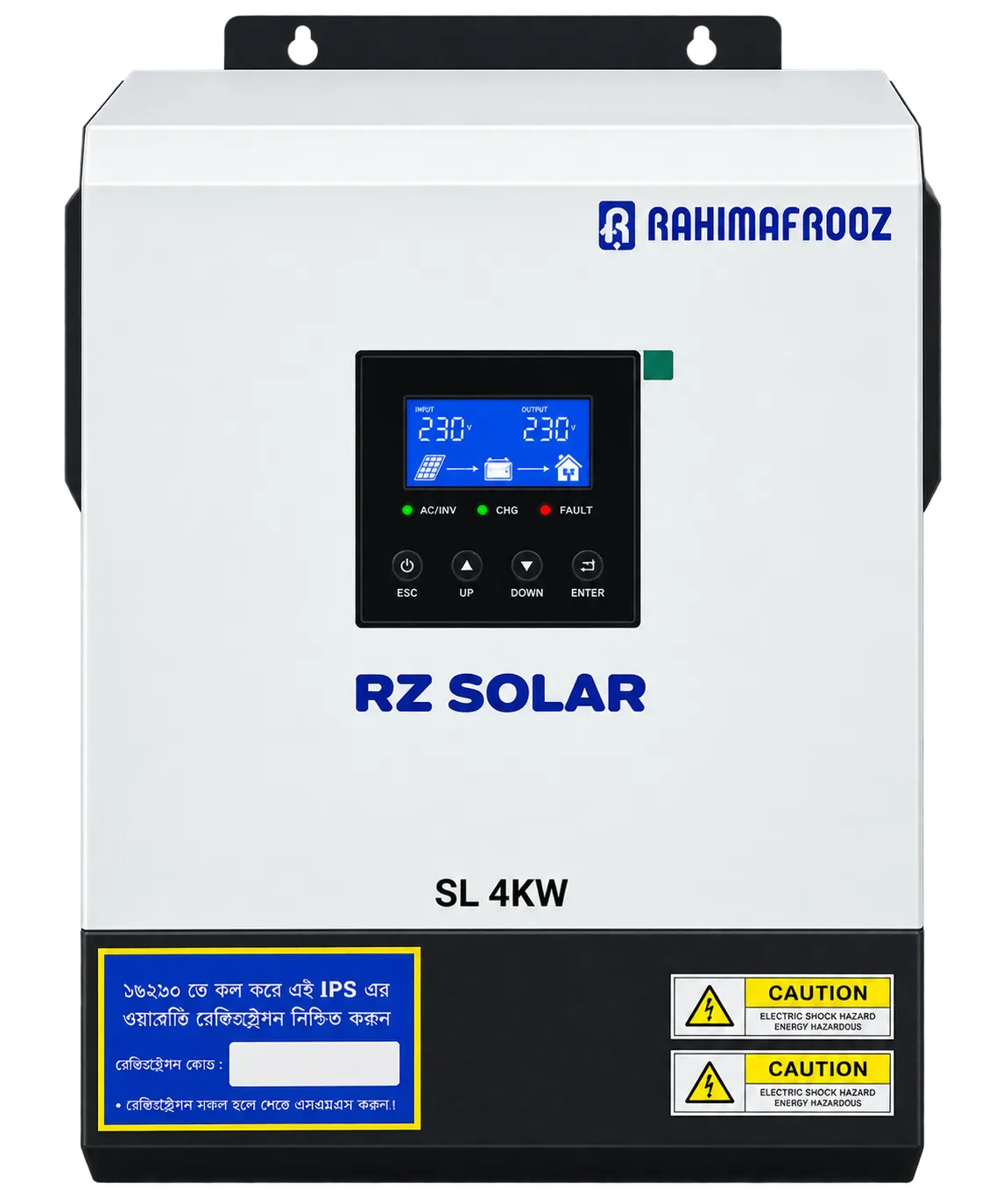
smart solar and power brings a reliable solution for anyone looking to secure uninterrupted electricity in Bangladesh. The Rahimafrooz Hybrid 4KW inverter, known locally as রাহিমাফ্রুজ হাইব্রিড ৪কেডব্লিউ, combines solar, battery, and grid power in a single intelligent unit. This guide explains what the product does, why it matters, and how you can get the most out of it without worrying about costly outages.
smart solar and power hybrid inverter guide for Bangladesh
Hybrid inverters sit between pure on‑grid and off‑grid systems. They store excess solar energy, draw from the grid when needed, and keep critical loads running during blackouts. The Rahimafrooz Hybrid 4KW is designed for homes, small offices, and commercial setups that need up to 4000W of continuous power. Its 98% AC efficiency and 93% peak efficiency mean very little energy is wasted during conversion.
Key technical highlights
- Rated Power: 4000W (full load)
- Maximum PV Power: 6200W, MPPT charger
- Battery Compatibility: GEL, AGM, Lithium (24VDC system)
- Grid Input Voltage: 230VAC, selectable 170‑280VAC (PC) or 90‑280VAC (appliances)
- Surge Power: 8400VA for motor start‑up
- Communication: USB, RS232, Wi‑Fi, GPRS for remote monitoring
- Operating Temperature: –10°C to 50°C, humidity 5‑95% (non‑condensing)
- Physical Size: 555 × 385 × 220 mm, 10.5 kg
These specifications translate into real‑world benefits that address the most common pain points of Bangladeshi electricity users.
Why a hybrid inverter solves everyday power problems
Bangladesh experiences frequent load‑shedding, voltage fluctuations, and occasional grid failures. A conventional UPS can only run for a short time before its battery drains, while a pure solar system may not meet night‑time demand. The Rahimafrooz Hybrid 4KW bridges that gap by:
- Providing seamless transition between solar, battery, and grid within 10 ms (UPS mode) or 20 ms (appliance mode), protecting sensitive electronics.
- Managing loads intelligently with dual AC outputs that prioritize essential circuits during an outage.
- Optimising solar harvest through MPPT technology that extracts maximum power from panels up to 500 VDC.
- Extending battery life with over‑charge protection at 33VDC and floating charge at 27VDC.
Homeowners therefore enjoy continuous lighting, refrigeration, and communication without manual switching.
Choosing the right battery for the Rahimafrooz Hybrid 4KW
The inverter works with 24 VDC battery banks. Selecting the appropriate chemistry influences performance, lifespan, and maintenance effort.
GEL batteries
GEL batteries are sealed, low‑maintenance, and tolerant of deep discharge cycles. They are a solid choice for households that prefer a set‑and‑forget solution. However, they are heavier and have a slightly lower energy density than lithium options.
AGM batteries
Absorbent Glass Mat (AGM) batteries deliver high discharge rates and are also sealed. They handle temperature variations well, making them suitable for the humid climate of Bangladesh.
Lithium batteries
Lithium‑ion packs provide the highest energy density, fastest charging, and longest cycle life. The inverter’s 120 A solar charge current and 100 A AC charge current are fully compatible, allowing rapid replenishment during sunny periods.
When sizing the battery bank, aim for at least 2‑3 hours of full‑load backup (≈8‑12 kWh). This ensures that essential loads stay powered during prolonged grid outages.
Installation best practices
Professional installation guarantees safety and optimal performance. Follow these steps:
- Site Survey: smart solar and power conducts a free expert consultation (get a free expert consultation from smart solar and power) to assess roof space, shading, and load requirements.
- Mounting: Secure the inverter on a well‑ventilated wall, respecting the 10 cm clearance on all sides for heat dissipation.
- Wiring: Use appropriately sized cables for the 120 A charge current and 4000 W output. Follow local wiring codes and include a dedicated earth ground.
- Battery Connection: Connect batteries in series/parallel to achieve the 24 VDC system voltage. Verify polarity before tightening.
- Grid Integration: Connect the 230 VAC input to a dedicated circuit breaker. The inverter’s selectable voltage range handles most household appliances.
- Communication Setup: Enable Wi‑Fi or GPRS for remote monitoring via the smart solar and power app. This lets you track solar generation, battery state of charge, and load consumption in real time.
After installation, run a full system test: simulate a grid outage, verify the inverter switches to battery mode within the specified transfer time, and confirm that all critical loads stay powered.
Maintenance tips to extend inverter life
Regular upkeep keeps the system efficient for years.
- Clean the PV panels monthly to remove dust and bird droppings that reduce MPPT efficiency.
- Inspect battery terminals for corrosion and tighten connections.
- Check ventilation to ensure the inverter does not exceed its operating temperature range.
- Update firmware via the Wi‑Fi interface; smart solar and power releases periodic improvements for grid‑sensing algorithms.
- Run a self‑diagnostic using the built‑in test mode at least once a year. The inverter will report any fault codes through the monitoring app.
Common mistakes and how to avoid them
Even experienced users can slip into habits that reduce performance.
- Undersizing the battery bank leads to frequent deep discharges, shortening battery life.
- Using undersized cables causes voltage drop, especially during peak load, which may trigger unnecessary load cut‑off.
- Neglecting grounding can expose the system to lightning damage during monsoon storms.
- Skipping firmware updates prevents you from benefiting from improved grid‑sensing and load‑management features.
Why smart solar and power is the trusted partner in Bangladesh
smart solar and power (স্মার্ট সোলার অ্যান্ড পাওয়ার) has built a reputation for reliable service, local expertise, and rapid response. Their team offers:
- Free site surveys and expert advice tailored to Bangladeshi power conditions.
- Certified installers who follow national electrical standards.
- After‑sales support with a 36‑month warranty on the Rahimafrooz Hybrid 4KW unit.
- Remote monitoring via Wi‑Fi, allowing quick troubleshooting without a site visit.
Choosing this brand means you get a product that is engineered for local climate, backed by a network that understands the challenges of load‑shedding and high humidity.
Next steps for a resilient energy future
Investing in a hybrid inverter is a strategic move toward energy independence. To get started, browse the full catalog of solar solutions (explore our solar products) and schedule your free consultation. With smart solar and power, you gain a partner that guides you from design to long‑term operation, ensuring your home stays lit, cool, and connected even when the grid falters.
Embrace clean, renewable energy today and enjoy the peace of mind that comes with a robust, intelligently managed power system.
Related reading: Financing Solar Systems in Bangladesh: A Comprehensive Guide
Frequently Asked Questions
What type of batteries can I use with the Rahimafrooz Hybrid 4KW inverter?
The inverter is compatible with GEL, AGM, and Lithium batteries at 24 VDC. Choose the chemistry that best fits your budget, space, and maintenance preferences.
How long does the inverter take to switch to battery power during a grid outage?
In UPS mode the transfer time is typically 10 ms, and for appliance mode it is about 20 ms, ensuring seamless operation for sensitive devices.
Can I monitor the system remotely?
Yes, the inverter includes USB, RS232, Wi‑Fi, and GPRS interfaces. Using the smart solar and power app you can view solar generation, battery status, and load consumption from any smartphone.
What maintenance is required to keep the inverter running efficiently?
Clean the PV panels regularly, inspect battery terminals for corrosion, ensure proper ventilation, update firmware via Wi‑Fi, and run an annual self‑diagnostic test.
Is professional installation necessary?
Professional installation is recommended to ensure correct wiring, proper grounding, and compliance with local electrical codes, which also protects your warranty.