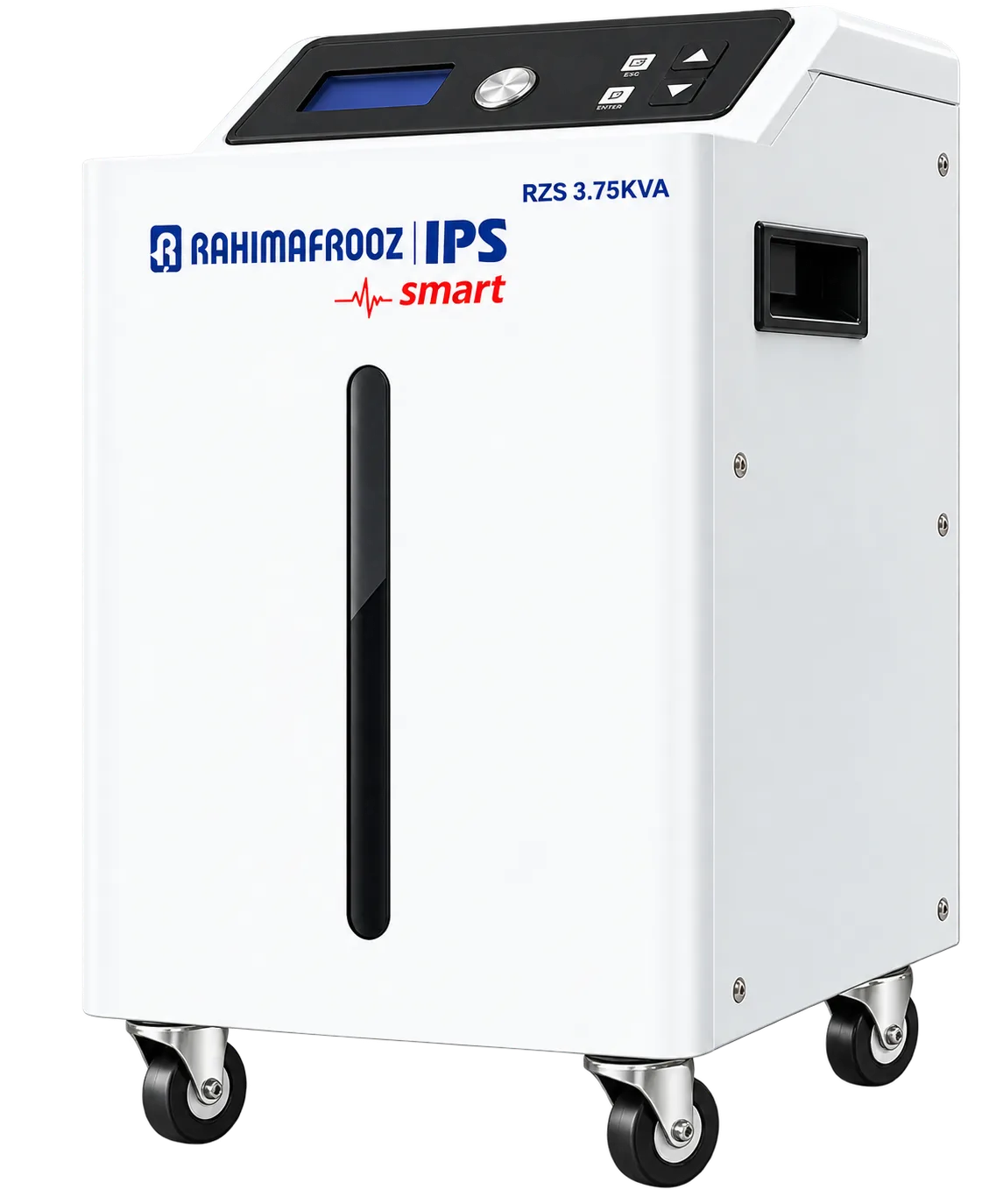
smart solar and power is reshaping how households and businesses in Bangladesh secure electricity. The Rahimafrooz RZS 3.75KVA (রহিমাফ্রুজ আরজিএস ৩.৭৫কেভিএ) stands out as a compact, hybrid inverter that blends solar charging, lithium‑based storage, and UPS functionality into one intelligent unit. This guide walks you through the key specifications, real‑world benefits, and practical steps to choose, install, and maintain this system.
smart solar and power hybrid inverter for Bangladeshi homes
Bangladesh experiences frequent grid fluctuations, especially during the monsoon season. A hybrid inverter like the RZS 3.75KVA offers seamless transition from grid to battery power, keeping essential appliances running without interruption. The built‑in 2.8" LCD display provides real‑time status of voltage, load, and battery health, allowing users to monitor performance at a glance.
Core specifications you need to know
- Capacity: 3750VA (3000W continuous output)
- Battery: 25.6V 200Ah LiFePO4, 4000 cycles @ 70% depth of discharge
- Transfer time: 20ms (UPS mode) for instant switchover
- Maximum solar input: 5000W, MPPT range 40‑450V
- Noise level: ≤50dB, suitable for indoor installation
These figures translate into a system that can run typical home loads—lights, fans, TV, and small kitchen appliances—for up to two hours on battery alone, while solar panels replenish the charge in roughly two hours of strong sunlight.
Why a lithium‑iron‑phosphate (LiFePO4) battery matters
LiFePO4 chemistry delivers a longer life cycle than traditional lead‑acid batteries, reducing the need for frequent replacements. The 150A hardware‑protected BMS safeguards against over‑current, over‑voltage, and temperature extremes, ensuring safe operation even in hot Bangladeshi summers.
Choosing the right solar panel setup
To maximize the inverter’s potential, match it with a solar array that stays within the 5000W limit and respects the 500V Voc ceiling. A common configuration uses four 300W panels (total 1200W) for modest households, while larger commercial spaces may install up to 5000W of panels.
Panel selection tips
- Prefer monocrystalline panels for higher efficiency in limited roof space.
- Ensure each panel’s open‑circuit voltage (Voc) falls between 40V and 450V to stay within MPPT tracking range.
- Use a quality mounting system that allows tilt adjustment for optimal sun exposure.
When the array is correctly sized, the inverter’s MPPT controller extracts maximum power, reducing charging time to the advertised two‑hour window.
Installation best practices
Professional installation guarantees safety and performance. Follow these steps:
Site survey and preparation
- Check roof orientation; south‑facing roofs capture the most sunlight in Bangladesh.
- Verify structural integrity to support panel weight.
- Plan cable routes to keep wiring away from water sources.
Smart solar and power offers free expert site surveys; you can get a free expert consultation from smart solar and power to confirm the best layout.
Mounting the inverter
- Place the unit in a well‑ventilated indoor space, protected from direct rain.
- Maintain at least 30 cm clearance on all sides for airflow.
- Connect the AC input/output breakers and earth leakage circuit breaker as per the wiring diagram.
The inverter’s IP20 rating means it is suitable for dry indoor environments but not for outdoor exposure.
Connecting the battery
- Use the supplied battery switch to isolate the LiFePO4 pack during maintenance.
- Confirm polarity before tightening connections.
- Secure the BMS cables to avoid accidental disconnection.
After wiring, power on the unit and let the LCD display run a self‑check. The system will indicate "Ready" when all parameters are within safe limits.
Operating and maintaining your hybrid inverter
Regular maintenance extends the life of both inverter and battery. Follow these simple routines:
Monthly checks
- Inspect the LCD for error codes and clear any alerts.
- Verify that solar panels are clean; dust reduces output by up to 15%.
- Listen for unusual noises; a humming sound louder than 50dB may indicate a cooling issue.
Battery health monitoring
The built‑in BMS reports state‑of‑charge and cycle count. Aim to keep the depth of discharge around 50‑70% for optimal longevity. The system automatically balances cells, but you should still avoid deep discharges that exceed the 70% DOD rating.
Software updates
Smart solar and power releases firmware upgrades that improve MPPT efficiency and add new safety features. Connect a Wi‑Fi dongle (required) and enable remote monitoring through the companion app.
Comparing alternatives
When evaluating other options, consider three main categories: traditional UPS units, stand‑alone solar charge controllers with separate batteries, and hybrid inverters from other brands. Traditional UPS units lack solar integration, meaning they rely solely on grid power and have limited runtime. Separate charge controllers require extra wiring and space, increasing installation complexity.
The Rahimafrooz RZS 3.75KVA consolidates these functions, reducing clutter and simplifying maintenance. Its 4000‑cycle lithium battery outlasts most lead‑acid alternatives, and the 20 ms transfer time beats many competitors that switch in several seconds.
Key decision factors
- Integration: One‑box solution vs. multiple devices.
- Battery lifespan: LiFePO4 vs. lead‑acid.
- Transfer speed: Milliseconds vs. seconds.
- Warranty: 36 months for Rahimafrooz.
Common mistakes to avoid
Even experienced users can slip into habits that reduce performance. Here are pitfalls to watch:
- Oversizing solar panels beyond 5000W; the inverter will limit input, wasting potential energy.
- Installing the unit in a humid bathroom; moisture can corrode internal components.
- Neglecting periodic cleaning of panels; dust and bird droppings cut efficiency.
- Using incompatible batteries; only the specified 25.6V 200Ah LiFePO4 pack should be paired.
By following the guidelines above, you ensure the system delivers reliable, green electricity for years.
Getting started with smart solar and power
Ready to bring clean energy to your home or office? Explore the full product line to find complementary accessories such as mounting brackets, additional battery modules, and Wi‑Fi dongles. Visit explore our solar products for a complete solution.
Remember, a well‑designed hybrid inverter not only protects against outages but also reduces dependence on the national grid, contributing to Bangladesh’s renewable energy goals. With the Rahimafrooz RZS 3.75KVA, you gain a reliable power hub backed by the trusted expertise of smart solar and power.
Related reading: সোলার প্যানেল বসাতে ছাদের কতটুকু জায়গা লাগে?
Frequently Asked Questions
What type of battery does the Rahimafrooz RZS 3.75KVA use?
It uses a 25.6V 200Ah LiFePO4 lithium‑iron‑phosphate battery, which offers 4000 cycles at 70% depth of discharge and built‑in hardware protection.
How long does it take to fully charge the battery from solar panels?
Under optimal sunlight, the integrated MPPT controller can charge the battery in about two hours when the solar array is sized up to the 5000W limit.
Can the inverter operate without a Wi‑Fi dongle?
Yes, the core functions work without Wi‑Fi, but remote monitoring and firmware updates require the optional Wi‑Fi dongle.
What is the maximum load the inverter can handle temporarily?
It can sustain 1 minute at 102‑110% of rated load and 10 seconds at 110‑130% overload, providing short‑term extra power for surge demands.
Is professional installation required for safety and warranty?
Professional installation is recommended to ensure correct wiring, compliance with local codes, and to keep the 36‑month warranty valid.