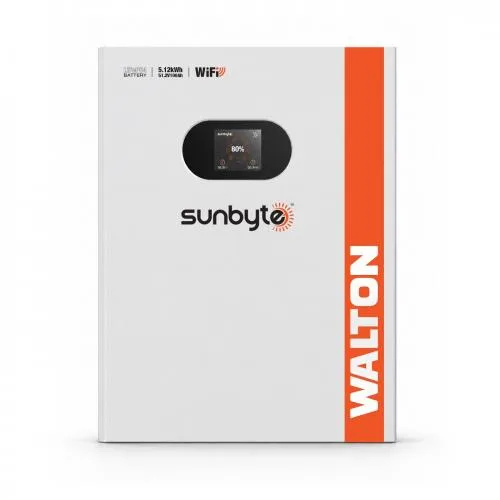
smart solar and power lithium battery guide – why choose Sunbyte 48V 100Ah with Wi‑Fi
The Sunbyte 48V 100Ah lithium battery delivers a nominal energy of 5.12 kWh, enough to power essential loads during night or grid outages. Its prismatic LFP (A‑Grade Cell) construction provides superior thermal stability and long cycle life. With a 5‑year warranty and a rated cycle life of 6 000 cycles, the product promises reliable service for many years. The built‑in Wi‑Fi module enables remote monitoring through smartphones or tablets, allowing you to track state‑of‑charge, voltage, and health in real time.Key specifications at a glance
- Nominal Voltage: 51.2 V
- Nominal Capacity: 100 Ah
- Nominal Energy: 5.12 kWh
- Maximum Discharge Current: 100 A
- Standard Charge Voltage: 56.8 V
- Discharge Cut‑off Voltage: 44.8 V
- Cell Type: Prismatic LFP (A‑Grade Cell)
- Communication Interfaces: RS485, USB, CAN, Wi‑Fi
- Operating Temperature (Charge): 0 °C – 55 °C
- Operating Temperature (Discharge): –20 °C – 55 °C
- Dimensions (mm): 480 × 600 × 165
- Net Weight: 52 kg
- Installation Method: Wall mounted or floor standing
- Parallel Capability: Up to 16 units in parallel
- Warranty: 5 years
- Energy Throughput: 11 MWh @ 65 % EOL
Integration with solar power systems
The Sunbyte battery works seamlessly with on‑grid, off‑grid, and hybrid solar configurations. In an off‑grid setup, it stores energy generated by photovoltaic panels and supplies power when sunlight is unavailable. For grid‑tied or hybrid systems, the battery can smooth fluctuations, provide backup during outages, and enable participation in net‑metering schemes where permitted. Its high discharge current of 100 A supports larger inverter loads, making it suitable for residential solar home systems as well as small commercial installations.Installation considerations for Bangladesh environments
Bangladesh’s climate demands careful placement to protect equipment from humidity and heat. The Sunbyte battery’s flexible installation options let you mount it on a wall or keep it on the floor, depending on space availability and ventilation needs. Choose a location with good airflow and avoid direct exposure to rain or dust. The low‑voltage safety connection system reduces the risk of accidental shock during installation or maintenance.- Site survey: get a free expert consultation from smart solar and power to assess shading, load profile, and space constraints.
- Mounting: Use the supplied brackets for wall mounting; ensure the surface can bear 52 kg.
- Ventilation: Provide at least 10 cm clearance on all sides for heat dissipation.
- Cable sizing: Follow the manufacturer’s guidelines for discharge current to prevent voltage drop.
- Grounding: Connect the battery chassis to earth ground as per local electrical codes.
Wiring and safety connections
The battery features a low‑voltage safety connector that simplifies the wiring process. Connect the positive and negative terminals using appropriately rated cables, and double‑check polarity before energizing the system. Incorporate a suitable fuse or circuit breaker near the battery to protect against short circuits. When paralleling multiple units, use identical cable lengths to balance current distribution.Performance and longevity insights
Lithium iron phosphate chemistry offers a stable voltage profile throughout most of the discharge cycle, which translates to predictable power delivery. The Sunbyte’s cycle life of 6 000 cycles at 80 % depth‑of‑discharge (DOD) means it can handle daily cycling for many years without significant capacity loss. The manufacturer guarantees 5 years of warranty, reflecting confidence in the cell quality and overall design.Temperature handling and thermal management
Operating temperature ranges are generous: charging from 0 °C to 55 °C and discharging from –20 °C to 55 °C. In hot Bangladeshi summers, ensure the battery is placed in a shaded area or equipped with passive cooling fins. If the ambient temperature frequently exceeds 40 °C, consider installing a small fan to maintain optimal cell temperature and extend lifespan.Maintenance and monitoring made easy
The built‑in Wi‑Fi module allows you to monitor battery health via a smartphone app or web portal. Real‑time data includes state‑of‑charge, voltage, temperature, and cycle count. Regular monitoring helps you detect anomalies early and schedule preventive maintenance.- Periodic inspection: Check terminal connections for corrosion every six months.
- Cleaning: Wipe the battery surface with a dry cloth; avoid water or solvents.
- Software updates: Keep the Wi‑Fi firmware up to date for security and feature enhancements.
- Balance checks: Use the monitoring app to verify cell balance; imbalance may indicate a need for professional service.
Comparing Sunbyte with alternative storage options
Traditional lead‑acid batteries are cheaper upfront but suffer from lower energy density, shorter cycle life, and higher maintenance. They also require regular water topping and have a higher self‑discharge rate. In contrast, the Sunbyte’s LiFePO4 chemistry delivers higher usable capacity, no maintenance, and a longer lifespan. While other lithium batteries may offer higher voltage, the Sunbyte’s 48 V platform aligns well with common solar inverter specifications in Bangladesh, reducing the need for additional DC‑DC converters.Common mistakes to avoid during deployment
- Skipping the site survey and installing the battery in a poorly ventilated space.
- Using undersized cables that cause excessive voltage drop under high load.
- Connecting the battery without proper grounding, increasing shock risk.
- Operating the battery outside its specified temperature range, which can degrade cells.
- Neglecting regular monitoring, leading to unnoticed performance decline.
Choosing the right capacity for your application
Assess your daily energy consumption in kilowatt‑hours (kWh). For a typical household using 8 kWh per day, a single Sunbyte unit (5.12 kWh) can cover essential loads with a modest depth‑of‑discharge. If you need longer autonomy or plan to expand your solar array, consider paralleling two or more units, up to the supported 16‑unit limit. Remember that deeper discharge reduces cycle life, so aim for a 50‑70 % DOD for optimal longevity.Future‑proofing your solar storage investment
As solar technology evolves, the modular nature of the Sunbyte battery allows you to expand storage capacity without replacing existing units. Adding parallel modules increases total energy while preserving the same voltage, simplifying system upgrades. The communication interfaces (RS485, CAN, USB) enable integration with advanced energy management systems, smart home controllers, and utility‑scale monitoring platforms. This flexibility ensures that your installation remains compatible with upcoming grid regulations and smart‑grid initiatives in Bangladesh.Environmental impact and sustainability
Lithium iron phosphate batteries contain no toxic heavy metals such as lead or cadmium, reducing environmental hazards at end‑of‑life. The Sunbyte’s long cycle life means fewer replacements, which translates to lower material consumption over time. When paired with solar photovoltaic panels, the system offsets carbon emissions by generating clean electricity, supporting Bangladesh’s national renewable energy targets.Safety certifications and standards
The Sunbyte battery complies with international safety standards for LiFePO4 chemistry, including IEC 62619 and UL 2054. Its built‑in battery management system (BMS) monitors cell voltage, temperature, and current, providing over‑charge, over‑discharge, and short‑circuit protection. The low‑voltage safety connection further minimizes risk during installation and maintenance activities.Next steps and professional support
Partnering with a trusted installer ensures that your Sunbyte battery is integrated safely and efficiently. explore our solar products to find compatible inverters, charge controllers, and mounting accessories. The team at smart solar and power offers free site assessments, design recommendations, and after‑sales support, helping you achieve a reliable and clean energy system. By selecting the Sunbyte 48V 100Ah with Wi‑Fi, you invest in a robust, scalable, and environmentally responsible storage solution. With the expertise of smart solar and power behind you, the path to reliable solar power becomes clear and achievable.Related reading: Smart Solar and Power: How Much Roof Space Do Solar Panels Need in Bangladesh?
Frequently Asked Questions
Can the Sunbyte 48V 100Ah battery be used with my existing solar inverter?
Yes. The battery operates at a nominal 51.2 V and is compatible with most 48 V inverters used in residential and small commercial solar systems. Verify the inverter’s charge voltage range to ensure it matches the battery’s 56.8 V standard charge voltage.
What temperature ranges are safe for charging and discharging?
Charging is safe between 0 °C and 55 °C, while discharge can occur from –20 °C up to 55 °C. Avoid exposing the battery to temperatures outside these limits, as extreme heat or cold can affect performance and lifespan.
How many units can I connect in parallel for larger storage?
The Sunbyte design supports up to 16 units connected in parallel. Parallel connection increases total capacity while keeping the system voltage at 48 V, which is ideal for scaling up storage without additional converters.
Does the Wi‑Fi monitoring work without an internet connection?
The Wi‑Fi module creates a local network that you can access with a smartphone or tablet on the same LAN. Remote access via the internet requires you to configure port forwarding or use a cloud service, but basic monitoring works offline.
What regular maintenance does the battery require?
Maintenance is minimal. Perform visual inspections of terminals every six months, keep the surface clean and dry, and update the Wi‑Fi firmware periodically. Use the monitoring app to check cell balance and health, and address any alerts promptly.