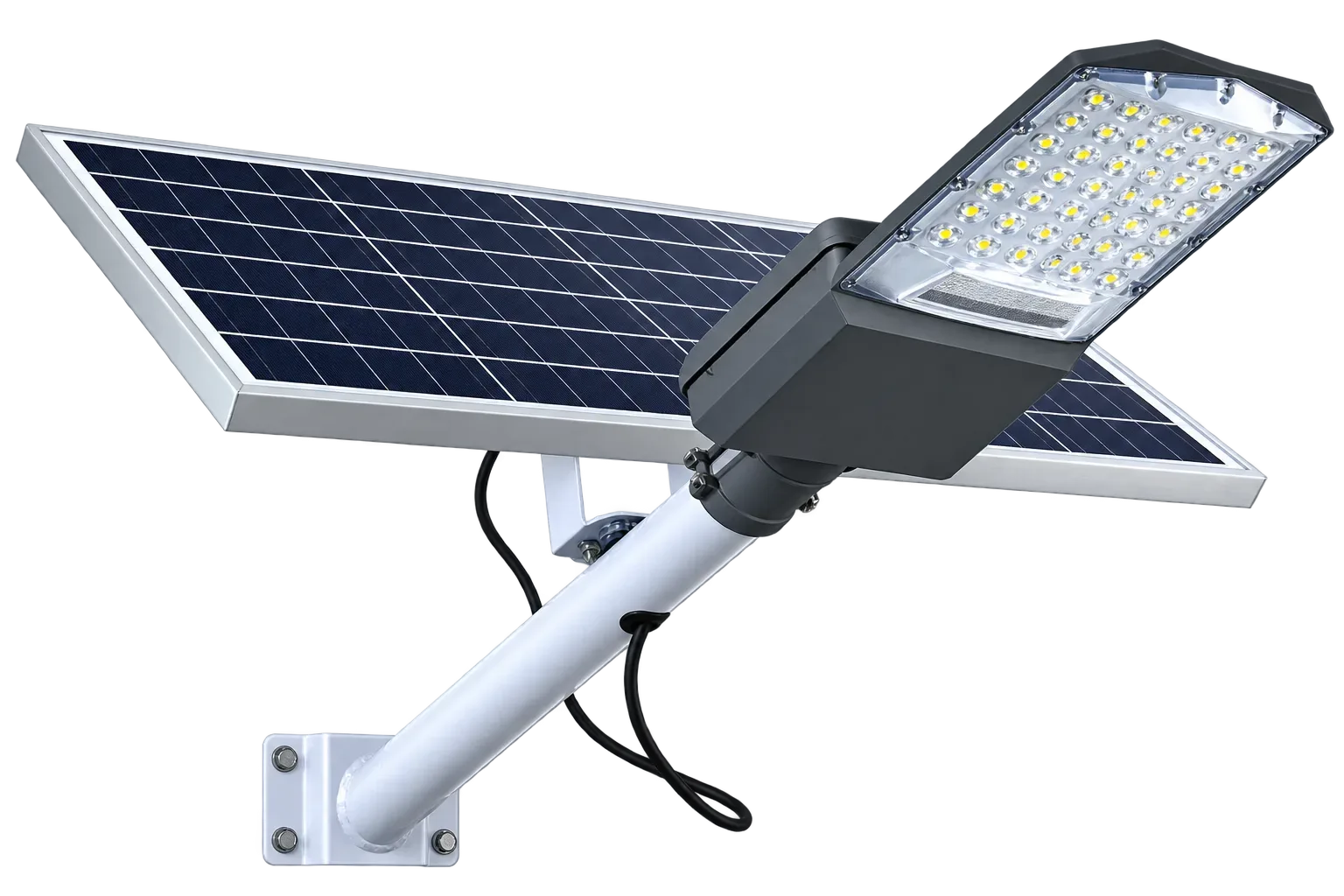
smart solar and power brings a reliable 400W solar street light solution designed for Bangladesh's urban and rural roads. This guide explains what the product is, why it matters, and how to choose, install, and maintain it for lasting performance.
What is a 400W Solar Street Light?
A 400W solar street light is an autonomous lighting unit that combines a high‑efficiency solar panel, a lithium‑ion battery, and powerful LED modules. It stores sunlight during the day and automatically switches on at dusk, providing bright, uniform illumination without any grid connection.
Key Components
- Solar Panel: Converts sunlight into electricity; typically monocrystalline for higher output.
- Battery Pack: Lithium‑ion cells store energy for night‑time operation and ensure stable voltage.
- LED Array: High‑lumens LEDs deliver up to 40,000 lux, covering wide road widths.
- Controller: Smart controller manages charging, discharging, and automatic dusk‑to‑dawn operation.
Why Choose a Solar Street Light in Bangladesh?
Bangladesh receives abundant solar radiation, making solar lighting a practical choice. A 400W unit reduces dependence on unreliable grid power, lowers carbon emissions, and improves safety on streets, highways, and community areas.
Environmental Benefits
Solar lighting produces zero greenhouse gases during operation, supporting national renewable energy goals. It also minimizes light pollution by using directional LEDs and programmable dimming.
How smart solar and power Stands Out
The brand smart solar and power (স্মার্ট সোলার অ্যান্ড পাওয়ার) has built a reputation for quality engineering and local support. Their 400W street lights come with a 12‑month warranty, professional installation, and after‑sales service tailored to Bangladeshi conditions.
Trusted Local Expertise
Customers benefit from free site surveys, expert consultation, and a network of trained technicians who understand local weather, soil, and road requirements.
Choosing the Right 400W Solar Street Light
When evaluating options, consider these factors:
- Location Sunlight Hours: Ensure the site receives at least 5‑6 peak sun hours daily for optimal charging.
- Mounting Height: Typical pole heights range from 8 to 12 meters for road illumination.
- LED Beam Angle: Wider angles cover broader lanes; narrower beams focus on specific zones.
- Battery Capacity: Verify the battery can store enough energy for at least 12‑14 hours of darkness.
Installation Steps
Professional installation guarantees safety and performance. Follow these general steps:
1. Site Survey
Assess sunlight exposure, pole foundation soil type, and wiring routes. get a free expert consultation from smart solar and power to validate the site.
2. Foundation Construction
Excavate and pour concrete footings according to pole dimensions. Allow curing for at least 24 hours before mounting.
3. Pole Erection
Secure the pole with a torque wrench, ensuring vertical alignment. Attach the solar panel bracket at the top.
4. Wiring and Connections
Connect the solar panel to the controller, then link the battery and LED modules. Verify polarity and tighten all connectors.
5. Programming the Controller
Set dusk‑to‑dawn thresholds, optional motion sensors, and dimming schedules via the controller’s LCD interface.
Maintenance Best Practices
Regular upkeep extends the lifespan of the system.
- Clean Solar Panels: Remove dust and bird droppings monthly using a soft cloth and mild soap.
- Battery Health Check: Inspect for swelling or corrosion quarterly; replace if performance drops.
- LED Inspection: Replace dimming LEDs promptly to maintain uniform brightness.
- Controller Firmware: Update firmware annually for improved efficiency.
Common Mistakes to Avoid
Even experienced users can overlook simple details.
- Installing in shaded areas reduces charging efficiency.
- Using incorrect pole depth leads to instability during storms.
- Neglecting battery ventilation can cause overheating.
- Skipping the initial calibration of the controller results in premature dimming.
Comparing Alternatives
Traditional grid‑connected street lights rely on diesel generators or unstable power lines, leading to frequent outages. Hybrid solutions combine grid and solar, but add complexity and maintenance. The 400W autonomous unit from smart solar and power offers a clean, self‑sufficient alternative with lower long‑term operational demands.
Performance Metrics
Typical luminous efficacy for a 400W LED array exceeds 130 lumens per watt, delivering bright, uniform light while consuming minimal energy.
Getting Started with smart solar and power
Begin by contacting the brand for a free site assessment. Their team will recommend pole placement, calculate expected illumination levels, and schedule installation.
After installation, monitor performance via the controller’s display or a mobile app (if supported). Regular checks ensure the system operates at peak efficiency throughout the year.
For a broader view of available solutions, explore our solar products and discover how solar technology can transform public spaces.
Related reading: Smart Solar and Power: সোলার প্যানেল কি সরাসরি ফ্যানের সাথে যুক্ত করা যায়?
Frequently Asked Questions
How long does the 400W solar street light operate on a full charge?
The lithium‑ion battery typically provides 12‑14 hours of illumination, covering the entire night period under normal conditions.
Is the system suitable for both urban and rural roads?
Yes, the autonomous design works in any location with sufficient sunlight, making it ideal for city streets, village lanes, and industrial sites.
What maintenance is required to keep the light functioning optimally?
Clean the solar panel monthly, check battery terminals quarterly, and inspect LED modules for any dimming or damage during routine checks.
Can the light be integrated with motion sensors for energy saving?
The controller supports optional motion sensors that dim the LEDs during low‑traffic periods and brighten when activity is detected.
What warranty does smart solar and power provide for this product?
All 400W solar street lights come with a 12‑month warranty covering manufacturing defects and component failures.