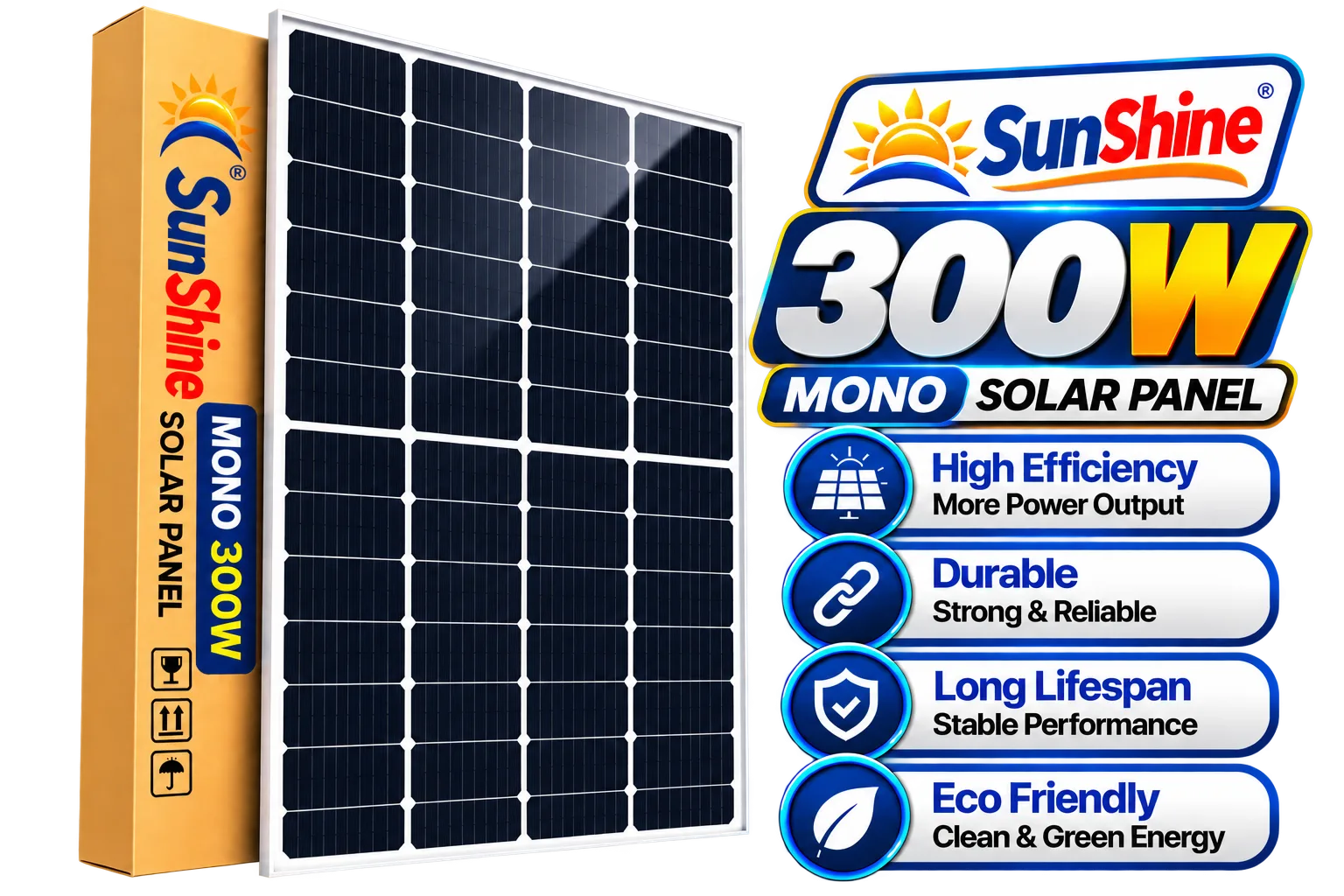
When you’re looking for a reliable off‑grid solar solution in Bangladesh, smart solar and power offers the Sunshine 300W (সানশাইন ৩০০ডব্লিউ) panel, a high‑performance 300‑watt mono‑bifacial module engineered for rugged environments. This guide walks you through the panel’s key specifications, real‑world benefits, installation basics, maintenance tips, and common pitfalls, so you can decide if it matches your energy goals.
smart solar and power Sunshine 300W solar panel overview
The Sunshine 300W is a Germany‑cell, 12V mono‑bifacial solar panel that captures sunlight on both its front and rear surfaces. Its Maximum Power (Pmax) is 300 W, with a Maximum Power Voltage (Vmp) of 21.04 V and a Maximum Power Current (Imp) of 14.26 A. The panel’s open‑circuit voltage (Voc) stands at 24.62 V, while the short‑circuit current (Isc) reaches 16.68 A. It tolerates up to 1000 V system voltage and a 20 A series fuse, making it suitable for a wide range of off‑grid and hybrid configurations.
Dimensions measure 1720 mm × 760 mm × 35 mm, a size that fits most roof mounts and ground‑mount frames. The product carries a 25‑year performance warranty, assuring long‑term output stability. In Bangladesh’s hot, humid climate, the bifacial design can boost energy yield by up to 10 % compared with traditional monofacial panels, especially when installed over reflective surfaces such as light‑colored roofs or sand‑covered ground.
Why choose a bifacial panel for Bangladeshi installations?
Bifacial panels generate electricity from light that reflects off the ground or nearby structures. In coastal and riverine regions of Bangladesh, the high albedo of sand, water, or light‑colored concrete can add a meaningful amount of extra power. The Sunshine 300W’s Germany‑cell technology ensures high conversion efficiency, while the mono‑crystalline silicon base provides durability against humidity and temperature swings.
- Higher energy yield: Up to 10 % more power in reflective environments.
- Robust construction: 35 mm glass thickness resists hail and wind.
- Long warranty: 25‑year performance guarantee.
Matching the Sunshine 300W with the right system components
To unlock the panel’s full potential, pair it with compatible inverters, charge controllers, and battery banks. smart solar and power recommends using MPPT charge controllers that can handle the panel’s voltage range (up to 24.62 V Voc) and current (16.68 A Isc). For off‑grid homes, a 12 V or 24 V battery bank with lithium‑ion chemistry provides efficient storage and deep‑cycle performance.
When designing a hybrid system that can switch between grid and battery, select an inverter rated for at least 300 W continuous output and a surge capacity of 600 W. The inverter should support the 1000 V system voltage limit of the panel, ensuring safe integration with other modules if you expand the array later.
Key sizing calculations
Assume a daily consumption of 5 kWh. With an average solar irradiance of 5 kWh/m²/day in Dhaka, a single Sunshine 300W panel produces roughly 1.5 kWh per day (300 W × 5 h × 0.9 efficiency). To meet the load, you would need about four panels in parallel, delivering 1.2 kW peak. This configuration stays within the 20 A series fuse limit (4 × 14.26 A ≈ 57 A, but panels are wired in parallel, so each branch stays under 20 A). Always consult a qualified installer for precise calculations.
Installation best practices for the Sunshine 300W
Proper mounting and orientation are critical for maximizing output. Follow these steps:
- Orientation: Aim the panel toward true south (for the northern hemisphere) with a tilt angle of 10‑15° to balance seasonal sun angles.
- Clearance: Leave at least 30 cm of space behind the panel to allow airflow and rear‑side light capture.
- Ground mounting: If using a ground‑mount, consider a reflective surface such as white gravel or painted concrete to enhance bifacial gain.
- Wiring: Use UV‑resistant, tinned‑copper cables sized for the panel’s current (minimum 10 mm² for 14 A). Connect panels in parallel to keep voltage within the charge controller’s range.
- Safety: Install a DC disconnect switch near the array and a surge protection device to guard against lightning.
For a flawless start, get a free expert consultation from smart solar and power. Their engineers will conduct a site survey, recommend the optimal layout, and handle permits if needed.
Maintenance routine to keep the panel performing
The Sunshine 300W requires minimal upkeep, but regular checks ensure the 25‑year warranty remains valid. Follow this schedule:
- Quarterly visual inspection: Look for dust, bird droppings, or shading from new foliage.
- Annual cleaning: Rinse with water and a soft brush; avoid abrasive detergents that could scratch the glass.
- Electrical testing: Measure open‑circuit voltage and short‑circuit current to verify that values stay within the manufacturer’s tolerance (+0‑5 W).
- Connector check: Tighten MC4 connectors and replace any corroded seals.
Neglecting these steps can reduce output by up to 15 % over a few years, especially in dusty urban areas.
Common mistakes and how to avoid them
Even experienced homeowners can slip into habits that hurt performance. Watch out for:
- Over‑tilting: Excessive tilt increases wind load and reduces rear‑side irradiance.
- Shading: Partial shading on any part of a mono‑bifacial panel can cause a disproportionate drop in power.
- Undersized wiring: Using cables that are too thin leads to voltage drop and heating.
- Skipping grounding: Proper grounding prevents electric shock and protects equipment from surges.
By planning ahead and following the guidelines above, you’ll enjoy stable, clean energy for decades.
Why smart solar and power (স্মার্ট সোলার অ্যান্ড পাওয়ার) is the trusted partner in Bangladesh
Since its inception, smart solar and power has focused on delivering reliable solar solutions tailored to Bangladeshi conditions. Their team of certified engineers provides:
- Free expert consultation and site surveys.
- Professional installation by trained technicians.
- After‑sales support, including warranty claims and performance monitoring.
Choosing a provider with local expertise reduces installation errors and ensures compliance with national regulations such as net‑metering policies and building codes.
Expanding your system in the future
The Sunshine 300W’s modular design lets you scale the array as your energy needs grow. Adding more panels is straightforward: maintain the same voltage range, keep parallel connections, and verify that the charge controller can handle the increased current. When you reach a larger size, consider a hybrid inverter that can manage both grid‑tied and off‑grid operations, giving you flexibility during power outages.
For a full view of the product lineup, explore our solar products. You’ll find compatible inverters, batteries, and mounting solutions that integrate seamlessly with the Sunshine 300W.
Final thoughts on the Sunshine 300W for Bangladeshi homes
The Sunshine 300W (সানশাইন ৩০০ডব্লিউ) panel combines high efficiency, durability, and a generous warranty, making it a solid choice for off‑grid and hybrid solar projects across Bangladesh. Paired with the expertise of smart solar and power, you gain a system that not only meets today’s electricity demand but also adapts to future growth. Start planning your clean‑energy transition now, and let the Sunshine 300W illuminate your path to energy independence.
Related reading: সোলার সিস্টেমে আর্থিং এবং লাইটনিং অ্যারেস্টার: নিরাপত্তার জন্য অপরিহার্য উপাদান
Frequently Asked Questions
Can the Sunshine 300W panel be used for a rooftop solar home system in Dhaka?
Yes, the panel’s dimensions and mounting options make it suitable for rooftop installations. Ensure the roof orientation faces south and keep a clearance behind the panel to capture rear‑side sunlight.
What type of battery works best with the Sunshine 300W in an off‑grid setup?
Lithium‑ion batteries are recommended because they have high charge‑acceptance efficiency and longer cycle life, which complements the panel’s high output and reduces overall system weight.
How often should I clean the Sunshine 300W panels in a dusty urban area?
A light rinse every three months is sufficient, but during the dry season you may need to clean them monthly to prevent dust buildup that can lower efficiency.
Is the 25‑year warranty applicable in Bangladesh’s humid climate?
The warranty covers performance degradation and material defects regardless of climate, provided the panel is installed according to the manufacturer’s guidelines and regular maintenance is performed.
Can I connect multiple Sunshine 300W panels to a single charge controller?
Yes, you can connect them in parallel as long as the total current does not exceed the charge controller’s rated input and each branch stays within the 20 A series fuse limit.